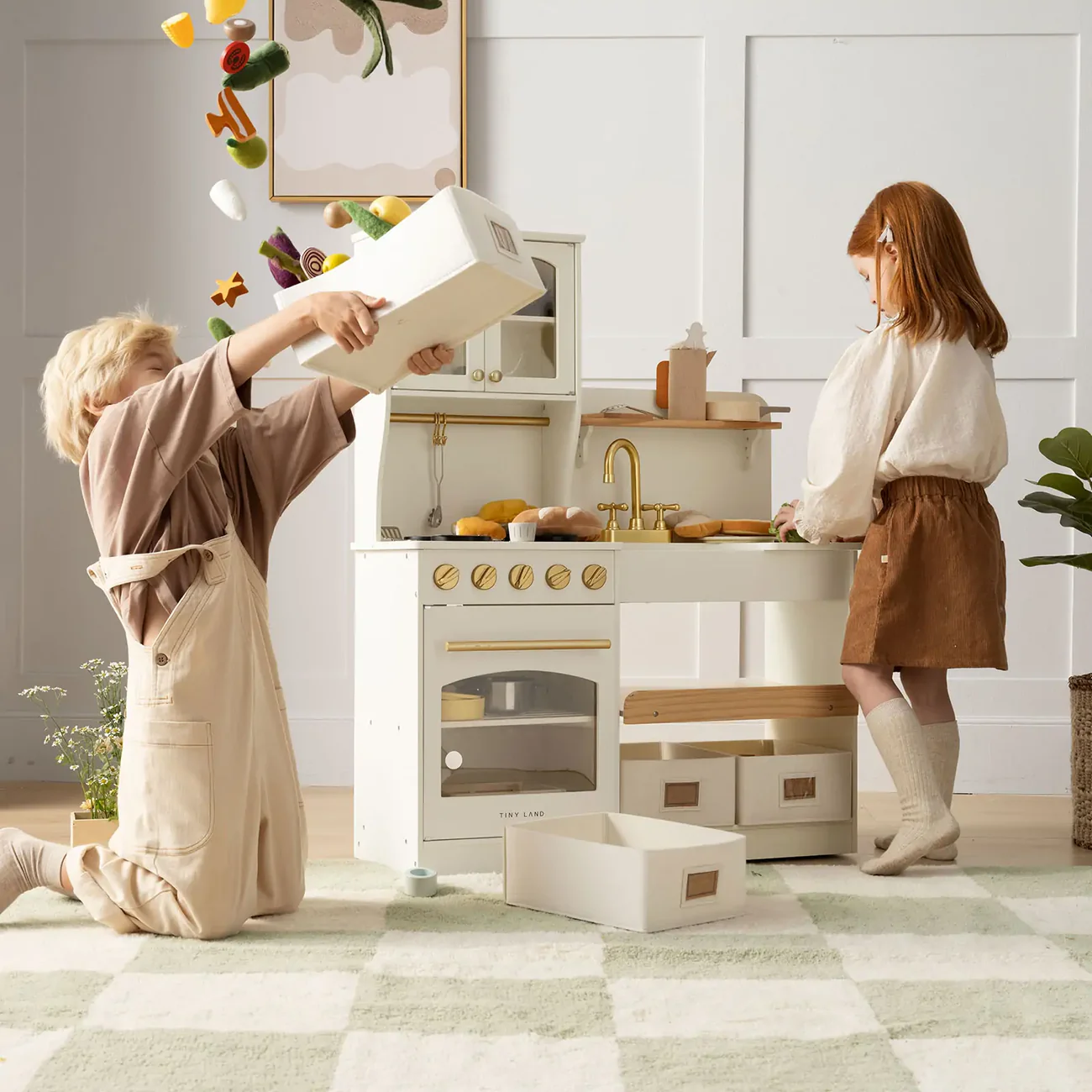
In the early years of childhood, play is not merely a source of entertainment but a crucial component of development. Among the many toys that encourage growth and learning, a play kitchen stands out as an exceptional tool for toddlers. Having a play kitchen in their room offers numerous benefits that support cognitive, social, and emotional development.
Firstly, a play kitchen fosters creativity and imagination. Toddlers often mimic the adults around them, and having their own little kitchen allows them to role-play scenarios they observe daily. Whether pretending to cook meals or serve guests, this imaginative play helps children develop storytelling skills and enhances their ability to think abstractly. It also encourages problem-solving as they figure out how different components work together-such as opening cabinets or turning knobs.
Additionally, playing in a kitchen set promotes fine motor skills. Manipulating small objects like toy utensils, pots, pans, and food items requires precision and coordination. These activities strengthen hand-eye coordination and dexterity which are essential for everyday tasks like writing or buttoning clothes later on.
Social skills are another significant advantage gained from having a play kitchen nearby. When toddlers engage in pretend cooking with siblings or friends, they learn cooperation, sharing, taking turns, and communication. These interactions build empathy by encouraging children to consider others’ perspectives while negotiating roles during their imaginative games.
Moreover, introducing basic concepts related to nutrition through playful interaction can cultivate healthy habits early on. Parents can use the play kitchen as an opportunity to teach names of fruits and vegetables or explain simple ideas about balanced meals without making it feel like formal instruction.
Having this interactive setup within easy reach means toddlers have constant access to constructive activities that divert attention from passive screen time towards active engagement instead. This accessibility empowers children by giving them autonomy over their environment-allowing independent exploration while feeling secure in familiar surroundings.
Furthermore, incorporating educational elements into the toy itself enhances learning potential; some modern kitchens come equipped with numbers on buttons or color-coded sections which subtly introduce counting skills and color recognition during routine play sessions.
In conclusion (without explicitly stating so), equipping every toddler’s room with a play kitchen is more than just adding another toy-it’s investing in an enriching developmental tool that nurtures imagination, improves motor abilities, encourages social interaction, and lays foundational knowledge about everyday life skills-all within the comfort of their personal space where curiosity naturally flourishes.